
Battery Discharging Warning Does Not Identify the Cause
If it returns after the car sits with every added device disconnected, have the battery, charging system and sleeping current tested to model-specific specs.
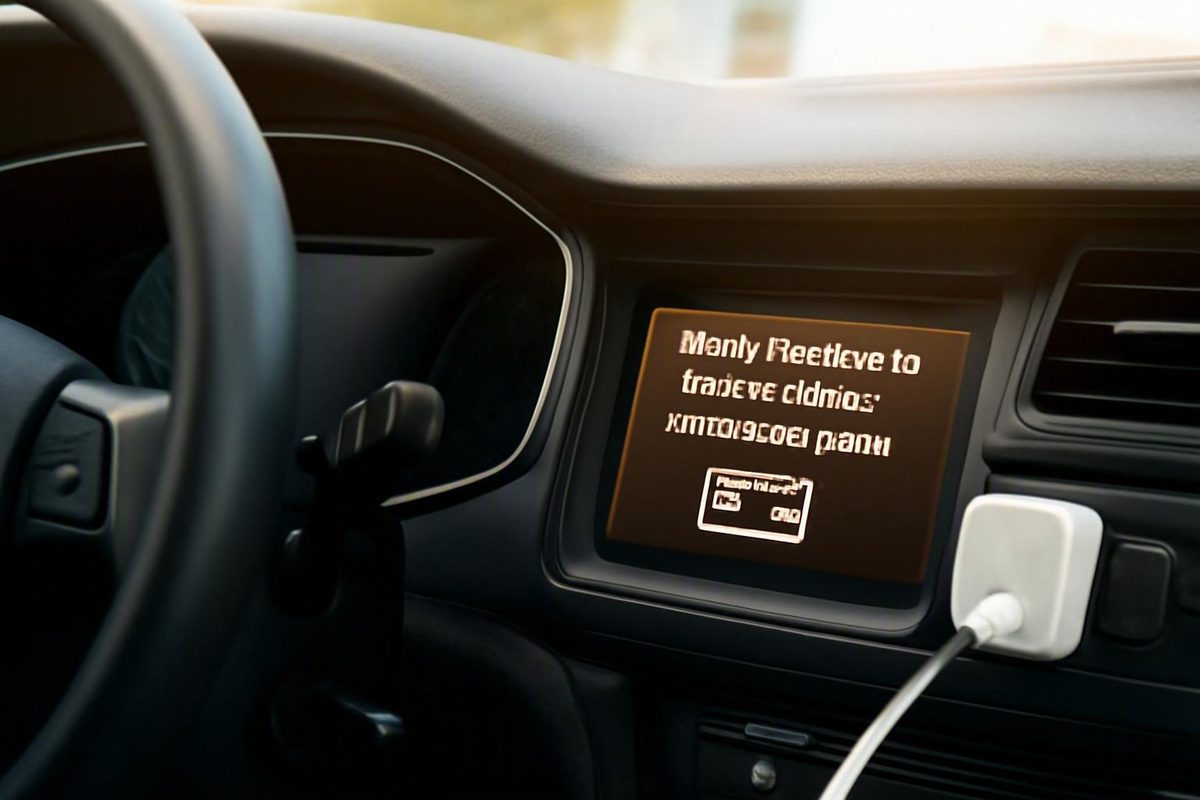
A dashboard message saying “Battery Discharging Due to External Electrical Devices” should be treated as a warning about 12-volt energy loss—not as a diagnosis naming the faulty part.
Kia documents the warning in connection with over-current from an unauthorized additional electrical device, such as a parking-mode dashcam. That does not prove an accessory is responsible every time. If the message recurs, the broader diagnosis may need to consider the battery’s state of charge and capacity, hidden loads, connections, and charging-system performance.
The practical response is to remove nonessential loads, check simple causes, recharge the battery correctly, and observe whether the warning returns under comparable conditions. If it does, move to measured diagnosis rather than repeatedly charging or replacing the battery.
What the warning actually means
In one Kia online owner’s manual, the vehicle is described as detecting 12-volt battery self-discharge associated with over-current from an unauthorized electrical device. A dashboard camera operating during parking is the stated example. Kia advises professional inspection—preferably by an authorized Kia dealer or service partner—if the warning continues after external devices have been removed. That wording appears in Kia’s owner-manual explanation of 12-volt battery discharge.
That is manufacturer guidance for a particular manual implementation, not proof that every Kia or Hyundai model uses identical detection criteria.
The dashcam is an example, not a verdict. The displayed message does not establish that:
- An aftermarket device is installed.
- A connected accessory is the only source of battery depletion.
- The battery is fully charged or able to retain adequate capacity.
- The charging system and its wiring are operating correctly.
- A particular fuse, circuit, sensor, or module has failed.
In plain language, stored energy has been removed from the 12-volt battery. That commonly occurs with the engine off, when the battery is supporting electrical loads without normal alternator replenishment. A battery can also enter a parking period undercharged because earlier trips or a charging fault did not replace the energy used.
The message itself does not identify the exact current path. Separate testing is required to determine whether an added device caused the discharge or whether another condition is contributing to recurring low charge.
The broader differential diagnosis falls into two groups:
- External or added loads: dashcams, trackers, alarms, remote starters, audio equipment, chargers, adapters, diagnostic devices, and other non-factory equipment.
- Battery or vehicle conditions: low state of charge, reduced battery capacity, loose or corroded connections, hidden lights, stuck switches or relays, wiring faults, factory modules that remain awake, and inadequate charging.
Consult the manual supplied for your exact vehicle. Do not assume that guidance for another Kia or Hyundai applies unchanged. If the warning persists after added electrical devices are removed, follow Kia’s advice and arrange professional inspection.
Start with when and how the warning appears
The timing of the message provides the first useful branch in the diagnosis. Record what the vehicle was doing before the warning appeared rather than focusing only on its wording.
1. The warning appears during deliberate accessory-mode use
If you are listening to the radio, charging devices, or operating another system with the engine off, the battery is actively supplying those loads. A warning in this situation may reflect current accessory-mode consumption rather than an abnormal overnight drain.
Turn off nonessential systems. If appropriate and safe, start the vehicle normally. If the warning does not recur after the battery receives a suitable recharge, prolonged engine-off accessory use may have been the main contributor.
“Normal use” does not guarantee that the battery has enough reserve for a long accessory session. An undercharged or deteriorated battery has less usable energy, so a session that once caused no obvious problem may later produce a warning or slow starting.
2. The warning appears immediately at startup
A startup warning may reflect energy removed before the engine began running. Possible explanations for the underlying low-charge condition include:
- A device remained powered while the vehicle was parked.
- Frequent short trips left the battery undercharged.
- An accessory was disconnected only after it had already consumed energy.
- The battery has reduced usable capacity.
- A vehicle circuit remained awake.
- Earlier driving did not fully replenish the battery.
Unplugging an accessory stops its future consumption, but it does not restore energy already removed. The warning may therefore recur while the battery remains undercharged. Recharge and assess the battery before deciding that disconnecting the accessory had no effect.
3. The warning appears after the locked vehicle sits
Recurrence after an overnight stay or a longer parking period deserves closer investigation. Three questions become especially important:
- Was the battery adequately charged before the vehicle was parked?
- Can the battery still store and deliver sufficient starting energy?
- How much current does the vehicle consume after its modules should be asleep?
A vehicle that starts normally after daily use but struggles after sitting may have excessive key-off consumption, limited battery reserve, or both. Compare like with like: note whether the vehicle was locked, how long it sat, and whether connected or hardwired devices were active.
4. The warning is accompanied by trouble while driving
A discharge message at startup is different from a battery or charging-system warning that appears while the engine is running. Dimming or flickering lights, malfunctioning accessories, erratic displays, stalling, or a battery/ALT warning while driving can indicate that the vehicle is not maintaining electrical power correctly. Battery and alternator symptoms overlap because the alternator normally powers vehicle systems and replenishes the battery after the engine starts, as this battery-versus-alternator overview explains.
If a charging-system warning appears while driving, the engine stalls, severe electrical malfunctions develop, or continued operation or restarting is doubtful, stop in a safe location and arrange roadside or professional assistance. Stalling while driving is specifically treated as a reason to stop safely and seek help in this battery and alternator diagnostic guidance.
For any of these branches, document:
- The exact warning or a clear photo.
- Whether it appeared during accessory use, at startup, after parking, or while driving.
- How long the vehicle had been parked.
- Whether it was locked.
- Recent short trips or periods of infrequent use.
- Every plugged-in and hardwired accessory.
- Recent jump-starts, charging sessions, battery work, or no-start events.
- Slow cranking, clicking, dim lights, flickering, or erratic displays.
This timeline often provides more diagnostic value than one isolated voltage reading.
Check the most likely external and hidden loads
Begin with reversible inspections that do not alter the vehicle’s circuits. Prioritize anything added to the vehicle, especially equipment designed to operate while parked:
- Dashcams with parking mode.
- GPS or fleet trackers.
- Aftermarket alarms.
- Remote-start systems.
- Amplifiers and high-powered stereos.
- Radar detectors.
- USB adapters and phone chargers.
- Wireless charging accessories.
- Diagnostic devices left in the data port.
- Equipment wired directly to the battery or fuse panel.
An accessory may remain powered because it was intentionally connected to constant battery power, because the wrong circuit was selected during installation, or because its wiring bypasses ignition-switched control.
Correct installation does not guarantee permanent fault-free operation. An accessory can later fail internally and begin consuming excessive key-off current. Loose wiring, damaged insulation, poor grounding, and incorrectly installed fuse taps can create additional problems.
Do not assume every 12-volt outlet turns off with the ignition. Check the manual for the exact outlet and vehicle. If you verify operation by observation, account for any documented retained-accessory-power or shutdown period before concluding that the outlet remains continuously live.
Next, perform a parked-vehicle light and closure sweep:
- Dome and map lights.
- Vanity-mirror lights.
- Glove-box light.
- Trunk or cargo-area light.
- Tailgate lighting.
- Under-hood light, if fitted.
- Door-edge or courtesy lights.
Confirm that every door, the trunk, tailgate, and hood closes completely. A misadjusted latch or defective switch may keep a lamp illuminated or prevent one or more modules from entering a low-power state. The light itself may not always be visible.
| Possible cause | Typical clue | First check |
|---|---|---|
| Dashcam in parking mode | Warning follows long parking periods or continuous recording | Disable parking mode or disconnect the dashcam for several comparable parking cycles |
| Always-live 12-volt outlet | Adapter or charger remains powered after the documented shutdown period | Confirm outlet behavior in the exact manual and observe it after the applicable delay |
| Incorrectly wired accessory | Device operates regardless of ignition position | Have its constant, switched, and ground connections checked against its installation requirements |
| Hidden lamp | Warning follows use of the glove box, trunk, cargo area, or vanity mirror | Verify that the lamp switches off when the compartment closes |
| Stuck switch or relay | Intermittent drain or a circuit that remains active | Have key-off current measured and the affected circuit isolated |
Owner forums can suggest places to inspect, but they cannot establish a common defect. Palisade owners, for example, have reported continuous dashcam recording, a cargo light set to remain on, and a draw associated with a multi-system fuse without identifying the failed component. Those are troubleshooting examples—not proof that another vehicle has the same cause—as the Palisade owner discussion demonstrates.
Do not treat permanent fuse removal as a repair simply because the warning stops. One fuse may power several safety, body-control, comfort, or communication functions. A change in current after fuse removal identifies a direction for diagnosis; it does not identify the failed component.
A safe first-response checklist
Use this sequence to reduce the chance of a dead battery while preserving useful diagnostic evidence.
-
Turn off engine-off loads. Exit accessory mode and switch off the audio system, ventilation fan, lights, heated features, and other nonessential systems.
-
Unplug removable devices. Disconnect USB adapters, chargers, dashcams, radar detectors, diagnostic dongles, and anything plugged into a 12-volt outlet.
-
Disable nonessential parking-mode equipment. Use the device manufacturer’s approved method to disable dashcam parking mode, trackers, or other added systems. If a hardwired device has no clear isolation procedure, have its installer or a qualified technician disconnect it correctly.
-
Check closures and hidden lights. Confirm that the doors, hood, trunk, and tailgate latch fully. Inspect the glove box, cargo area, vanity mirrors, cabin, and engine compartment for lights that remain on.
-
Visually inspect the battery connections. Look for loose clamps, obvious corrosion, damaged cables, or an improperly secured battery. Keep tools and jewelry away from paths that could bridge battery terminals.
-
Document every change. Record what you unplugged or disabled and when. Changing one category at a time can reveal a pattern; disconnecting everything without a record may make an intermittent problem harder to reproduce.
Removing a load prevents further consumption from that load. It does not restore charge already removed.
Recharge the battery using equipment compatible with the battery label, vehicle type, and exact owner-manual procedure. Do not assume every Kia or Hyundai uses the same battery chemistry, charger setting, access point, or connection sequence.
A jump-start may restore immediate starting, while a drive or compatible external charger may replace some lost charge. A maintainer may help preserve charge during storage or diagnosis. These are recovery or protection measures, not repairs for an ongoing electrical fault.
Short trips can worsen an undercharged condition because starting consumes energy and the following drive may not replace all of it. Infrequent use can have a similar effect because normal standby loads continue between trips.
After an appropriate recharge, leave added devices disconnected and monitor the vehicle through parking periods comparable to those that previously produced the warning.
Battery work carries short-circuit and injury risks. Wear eye protection, remove metal jewelry, prevent conductive tools from bridging terminals, and follow the vehicle manufacturer’s connection and disconnection procedure. General parasitic-draw guidance also recommends eye protection and ignition-off testing, but the exact vehicle manual controls where it specifies designated terminals or a model-specific sequence (UTI).
Do not disconnect the battery merely to clear the warning. Disconnection may reset systems, clear stored information, or cause security problems, and it interrupts current without revealing why the current existed. It is not a permanent repair for parasitic drain (Battery Tender).
External drain, weak battery, or charging-system fault?
The battery and alternator have related but distinct jobs. The battery provides the energy needed to start the engine and supports systems when charging is unavailable. Once the engine is running, the alternator generally supplies vehicle loads and replenishes energy removed from the battery.
Three patterns can produce overlapping symptoms.
Key-off parasitic drain
A parasitic drain is current that continues after the ignition is switched off. Some standby consumption is normal because clocks, memories, alarms, computers, door locks, and key-fob receivers may remain powered.
The problem is excessive current or a load that continues longer than intended. Possible causes include:
- A hardwired accessory connected to constant power.
- An internally failed accessory.
- A hidden lamp.
- A stuck relay.
- A faulty door, hood, or trunk switch.
- Damaged or incorrectly routed wiring.
- A module that fails to enter sleep mode.
- An alternator diode that permits reverse current after shutdown.
The pattern is often time-dependent: the vehicle works normally after driving but loses starting reserve while parked.
Reduced battery capacity or low state of charge
A sound battery can be temporarily undercharged, while a deteriorated battery may accept a charge yet provide inadequate starting reserve.
Battery-related clues include:
- Slow or labored cranking.
- Rapid clicking instead of cranking.
- Repeated loss of starting reserve.
- Visible terminal corrosion.
- Repeated need for external charging.
- A no-start after a relatively short parking period.
Repeated or severe discharge can leave a battery less capable even after the original load is removed. The battery should therefore be recharged and assessed rather than judged solely by whether it starts the engine once.
An engine-off voltage reading is a screening clue, not a complete battery test. It does not directly establish usable capacity, performance during cranking, or whether an intermittent drain occurs hours later. A charger percentage based mainly on voltage is not conclusive either.
Inadequate charging while the engine runs
An underperforming alternator may supply some power but fail to replace all the energy used during starting and vehicle operation. The deficit can accumulate over successive trips.
Charging-system clues include:
- A battery or ALT warning while driving.
- Headlights or interior lights that dim or flicker.
- Accessories that malfunction while the engine runs.
- Erratic displays.
- Stalling.
- Repeated depletion after battery replacement.
A faulty alternator diode creates a different failure mode: it may permit reverse current after shutdown. An alternator evaluation therefore may need to consider charging performance, connections, and relevant key-off behavior—not only one running-voltage reading.
Loose or corroded connections can resemble either a weak battery or charging failure. Resistance at a terminal or ground can restrict starting current and interfere with charging. Midtronics recommends considering parasitic drain, alternator faults, short-trip use, and poor terminal connections together rather than treating repeated battery trouble as an isolated battery problem; its discussion explains why battery, starting, and charging checks belong together.
A new battery does not eliminate the underlying possibilities. It can discharge again if constant-power wiring, a failed accessory, poor installation, an alternator problem, a sensor fault, a stuck relay, or a wakeful module remains. The efficient approach is to test the battery, starting system, charging system, cables, and grounds as one related system.
How parasitic-draw diagnosis finds the affected circuit
If the warning returns after an appropriate recharge and with added devices removed, diagnosis should move from observation to measurement.
Parasitic draw is current that continues after the ignition is off. Some current is expected, so the goal is not an absolute zero reading. The goal is to determine whether sleeping current exceeds the manufacturer’s specification for that exact vehicle and, if so, which circuit carries it.
A professional workflow generally follows this order:
- Recharge the battery using an appropriate method.
- Assess battery condition and usable starting capability.
- Verify charging-system performance.
- Inspect terminals, grounds, cables, and relevant connectors.
- Shut down the vehicle in the prescribed state.
- Allow all modules to complete their sleep sequence.
- Measure key-off current without waking the vehicle.
- Isolate the circuit responsible for an abnormal reading.
- Test the components, wiring, and control logic on that circuit.
- Confirm the repair through an appropriate parking period.
Sleep mode matters. Immediately after shutdown, modules may still be communicating, saving data, monitoring closures, or completing timed functions. Opening a door, operating a switch, unlocking the vehicle, or accessing some fuse panels can wake them and invalidate the reading. Technicians may need to arrange test access or simulate closed latches before shutdown.
Generic online standby-current ranges and sleep times differ. Those figures may explain the concept, but they must not override manufacturer service information. Acceptable draw and the required shutdown procedure are model-specific.
Circuit isolation is often described as removing fuses individually while monitoring key-off current. If removing one fuse produces a significant current reduction, that fuse identifies a circuit requiring investigation. It does not identify the defective component by itself.
One fuse may supply several devices or modules.
- An added accessory.
- A stuck relay.
- A faulty closure switch.
- A hidden lamp.
- Damaged or incorrectly routed wiring.
- A factory module that does not sleep.
- A module that wakes intermittently.
- An alternator diode or related charging component.
Intermittent faults can be especially difficult.
Safety warning: An in-series ammeter test places the meter directly in the current path. Incorrect meter settings, lead placement, or connection technique can damage the meter, vehicle electronics, wiring, or battery circuit. Never switch on the ignition or operate the starter while a meter is connected for this test. A published parasitic-draw testing overview describes fuse isolation and emphasizes ignition-off testing and personal protection.
Professional diagnosis is the safer choice if you lack a suitably rated meter, model-specific specifications, wiring diagrams, or experience around high-current battery circuits.
Why the warning may return after unplugging a device or replacing the battery
An apparent fix can fail for several reasons.
First, there may be residual undercharge. Removing the accessory stops its future consumption but does not replace energy already lost. Recharge the battery before using the next parking period as a meaningful comparison.
Second, the battery may have reduced usable reserve. It can show a plausible open-circuit voltage yet perform poorly during cranking or after a modest standby load. Voltage alone does not confirm adequate capacity.
Third, the suspected accessory may not have been the only problem. Constant-power wiring, a failed device, a stuck relay, a charging fault, a battery sensor or wiring issue, or a factory module may remain.
Fourth, the problem may be intermittent. A module may wake only during certain parking cycles, so a brief workshop test can show normal current even though the vehicle loses charge after a longer stay.
Owner reports illustrate why parts replacement should not be generalized. In one reported 2023 Sportage case, the warning returned after the battery was replaced, and the dealer later replaced a voltage-sensor assembly on the negative battery cable. The forum does not provide a confirmed long-term outcome, so that component cannot be presented as a general remedy. The case shows only that battery replacement did not correct that owner’s unresolved underlying fault.
The same caution applies to reports involving dashcams, cargo lights, key proximity, connected services, and individual fuse circuits. They can suggest useful checks, but they do not diagnose another vehicle.
Avoid replacing additional parts until testing identifies deficient charging, inadequate battery performance, excessive sleeping current, or an affected circuit. Otherwise, a battery, alternator, sensor, or module may be replaced without correcting the drain.
When to book service and what evidence to bring
Book service promptly if the warning continues after external devices have been removed, in line with Kia’s owner-manual guidance. Escalate sooner if you experience:
- A no-start condition.
- Repeated jump-starts.
- Severe slow cranking or clicking.
- Dim, flickering, or erratic electronics.
- A battery or charging-system warning while driving.
- Stalling.
- Electrical behavior that makes continued operation or restarting uncertain.
Bring a concise diagnostic worksheet containing:
- The exact warning text and a photo.
- Date, mileage, and ambient conditions.
- Time parked before the warning.
- Whether the vehicle was locked.
- Recent trip pattern, including frequent short trips.
- Battery replacement, jump-start, charging, or maintainer history.
- A complete accessory list.
- Details of every hardwired device and who installed it.
- Whether parking mode or low-voltage protection was enabled.
- Any no-start, clicking, slow-crank, stalling, or flickering event.
- Which devices were disconnected and whether the warning returned.
- How long the vehicle was observed after recharging.
Ask the shop to document:
- Battery condition and starting capability.
- Charging-system performance.
- Terminal, cable, and ground integrity.
- Applicable model-specific module sleep time.
- Measured key-off current after sleep.
- The circuit isolated if current was excessive.
- Follow-up component or wiring tests on that circuit.
The shop should also check VIN-specific manufacturer information, software updates, service bulletins, recalls, and warranty coverage. This does not imply that a campaign applies; VIN verification determines applicability.
If removing a fuse changes the measured draw, that removal should remain a diagnostic step. A multi-system fuse is not an acceptable permanent workaround. The completed repair should address the failed device, wiring, relay, switch, module, connection, or charging deficiency.
For an accessory-related repair, confirm that the device is connected to an appropriate power source and that any failed cutoff, module, ground, or wiring has been corrected. Suppressing the dashboard message does not by itself establish that the battery is protected.
Use this diagnostic hierarchy:
- Prevent immediate additional discharge.
- Restore the battery’s charge correctly.
- Verify battery, starting, connection, and charging health.
- Measure key-off current after the vehicle sleeps.
- Isolate the affected circuit.
- Repair the identified cause and confirm the result over comparable parking cycles.
Treat battery discharging due to external electrical devices as a warning about 12-volt energy loss, not a label for the culprit. Remove non-factory loads, check hidden lights and closures, inspect connections, recharge correctly, and observe the vehicle. If the message returns—especially after the vehicle sits with every added device disconnected—have the battery, charging system, sleeping current, and affected circuits tested to model-specific specifications.
Frequently asked questions
Can a dashcam in parking mode cause the battery-discharge warning?
Yes. Kia specifically gives a parking-mode dashcam as an example of an additional device that can contribute to 12-volt battery self-discharge.
Risk depends on how the dashcam is powered, how long it operates, its condition, and whether its low-voltage protection is present and functioning. Disable parking mode or disconnect the camera, recharge the battery appropriately, and monitor the vehicle through comparable parking periods. If the warning returns, do not assume the dashcam is still the only possible cause.
Why does the warning remain after I unplug all accessories?
The accessories may already have removed substantial charge before you unplugged them. Disconnecting them stops future consumption but does not recharge the battery.
The warning may recur because the battery remains undercharged or has reduced capacity, another hidden load remains, or the charging system is not restoring the energy used. Recharge and assess the battery, then seek measured key-off-current diagnosis if the warning returns with all added equipment disconnected.
Will driving the vehicle or using a battery maintainer fix the problem?
Driving may replace some charge, and a compatible maintainer can help preserve charge during storage or diagnosis. Neither repairs an ongoing drain, poor connection, failed accessory, wakeful module, or charging-system fault.
A significantly discharged battery may require controlled external charging rather than an assumed amount of driving. Follow the battery label and model-specific manual instead of relying on one universal driving time or charger setting.
Can a bad alternator cause battery discharge while the vehicle is parked?
Yes. A faulty alternator diode can permit reverse current after shutdown. Separately, an underperforming alternator can leave the battery undercharged before the vehicle is parked.
These are different failure modes and require appropriate charging-system and key-off testing. An engine-off voltage reading alone cannot diagnose either one.
Is it safe to keep driving after this warning appears?
It depends on the circumstances.
Stop safely and seek assistance if a battery or charging-system warning appears while driving, the engine stalls, lights or displays become severely erratic, or you are unsure whether the vehicle can continue operating or restart safely.